Najeonchilgi is the Korean art of mother of pearl inlay, full of symbolism and traditions. The name’s origins are the words for mother of peal and lacquerware, with najeon meaning mother of pearl, and chil being a shortened form of the world ottchil. Ott is a kind of tree native to Southeast Asia that provides the special lacquer needed for najeonchilgi. Ottchil, or the paint of an ott tree, provides an insect proof, water, and fire-resistant coating. For this reason, ottchil is not only used for common najeonchilgi such as furniture and cutlery, but has also been used for leather and armor.
Najeonchilgi is made by covering a surface with ottchil, which is very thick and dries very slowly. This allows the artist to place najeon pieces carefully, with the ability to shift pieces and nudge them into the perfect place. Once the design is complete, the artist places another layer of ottchil. This is allowed to dry. The final step, and most important, is to sand or chip off the pieces of ottchil covering the najeon until the excess is stripped away to reveal the full texture and colors of the najeon.
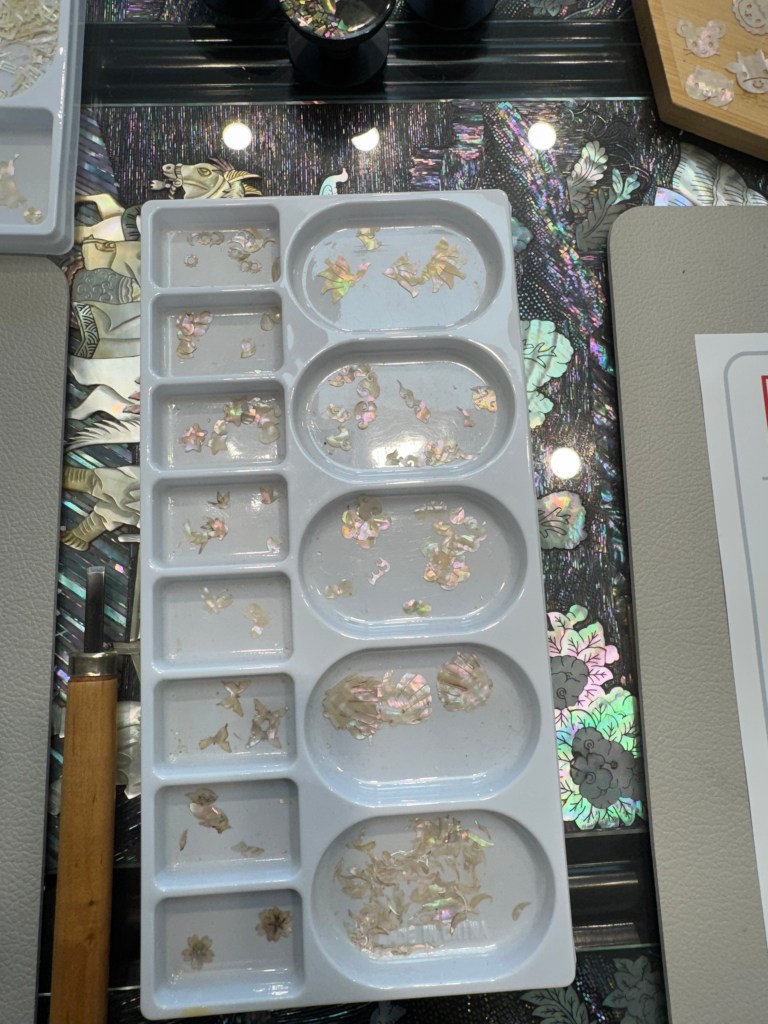
While in Korea, I had the opportunity to experience designing and putting together my own najeonchilgi on a keychain at Hwiho Crafts through the travel experience app klook. There were lots of options for me to choose from, such as a traditional hair stick called binyeo, a compact mirror, a trinket box, pop socket, brooch, or miniature traditional table called soban. Some of the options I had for the mother of pearl that had been prepared included animal shapes to match your Chinese zodiac sign, thin strips to form your own geometric design, and traditional motifs such as cranes, moons, turtles, flowers, pine trees, and swirling clouds.
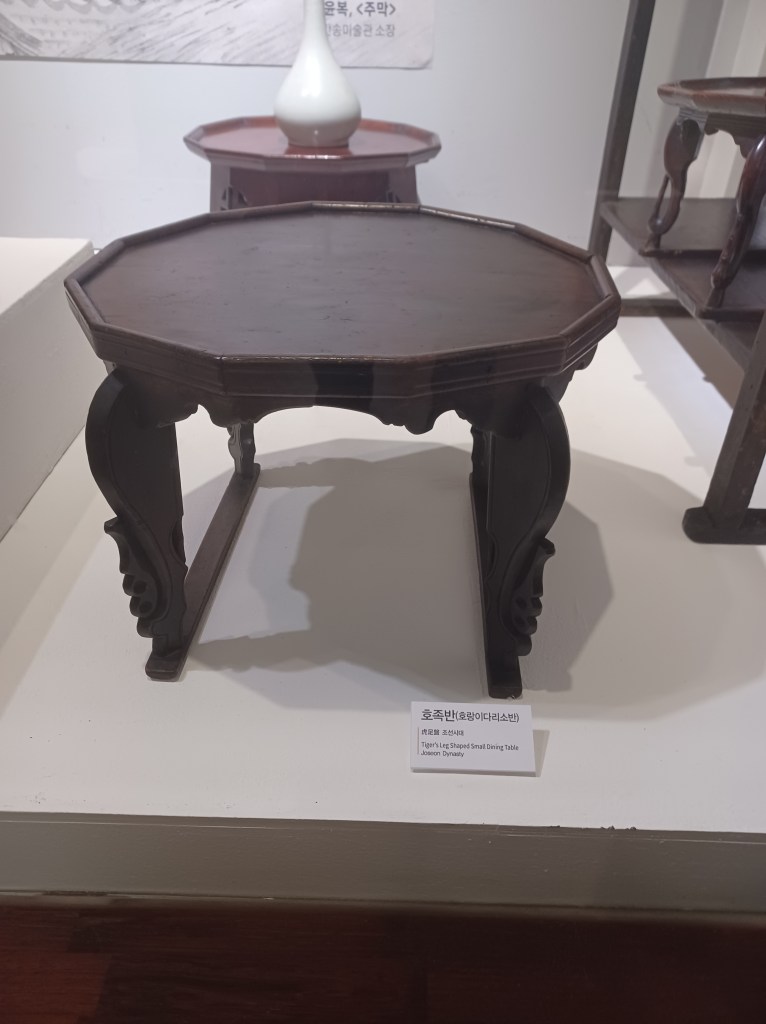
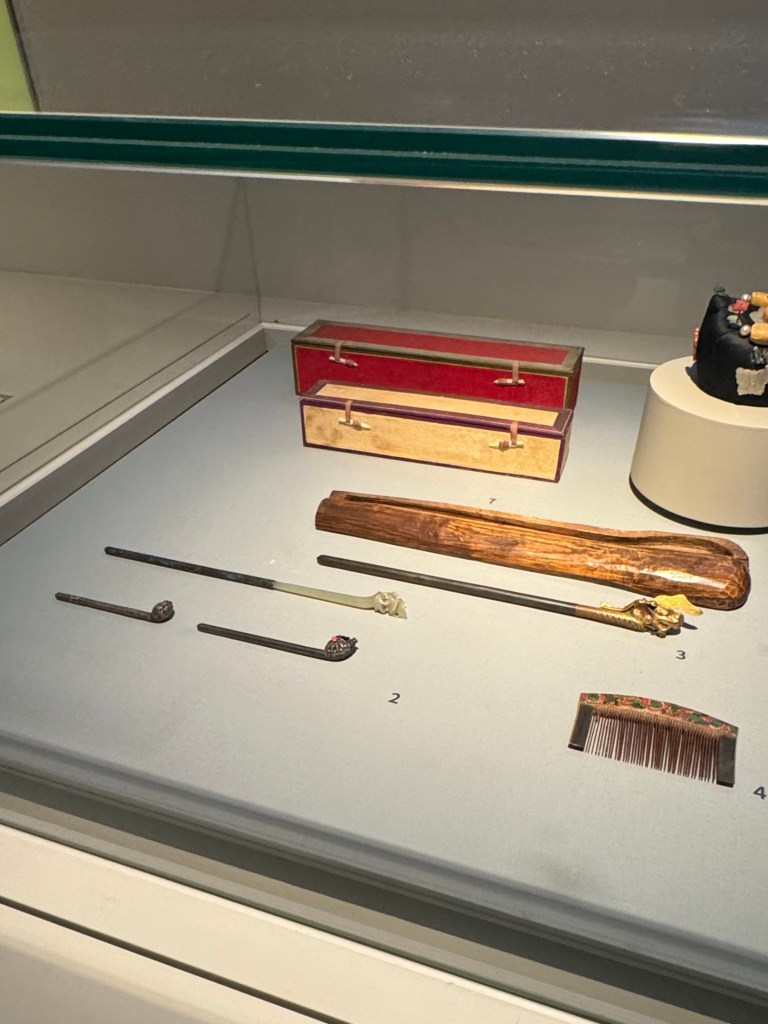
One thing I learned from museums was that pieces of furniture with najeonchilgi that were painted red were only allowed to be used by royalty. This is a picture I took that shows some red furniture pieces to the left and equally beautiful pieces to the right.
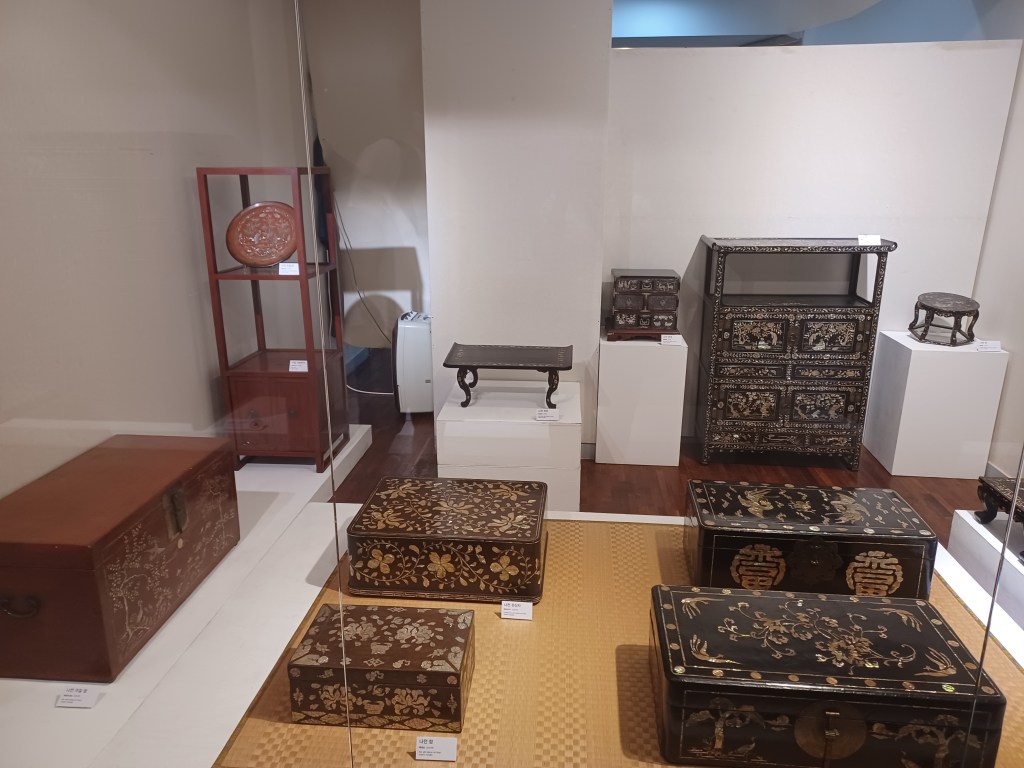
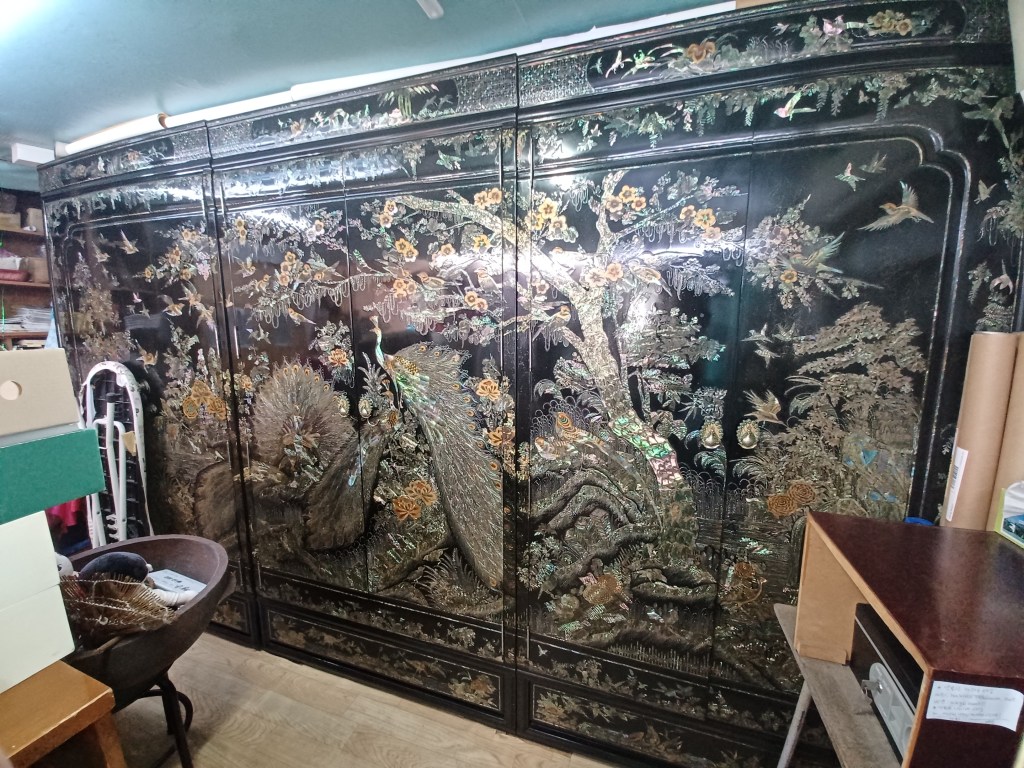
The art of najeonchilgi includes four cutting techniques (most of which were too difficult to learn in the day class I took). These techniques are: cut-out, thin-strips, engraving, and notching. The cut-out technique is used to create characters such as are shown in the picture above on the box in the middle of the floor in the top right. In the picture below, the road and much of the ‘background” used the thin-strips technique. The Notching technique can most easily be seen on the pieces of yellowish mother of pearl, especially to add detail to the human figures. The birds in the same picture are the best example of the notching technique.
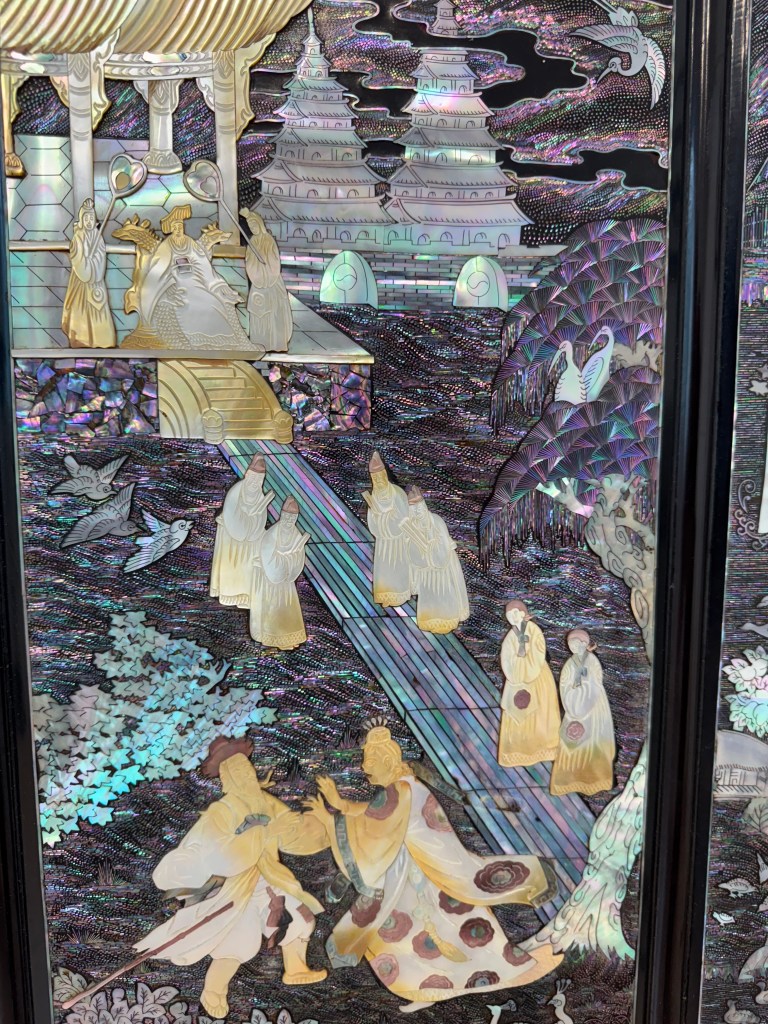
Of all these techniques I found the most fascinating to be the thin strips technique, since this is done as you are making the piece, instead of being precut like the rest. To use this technique I was told to pick a long strip of thinly cut mother of peal, lay it against the lacquer, and then cut it to the length I desired. This actually proved very difficult and I did not use it on my final product since I found my skill level far too low and kept accidentally breaking the thin strips before I could cut them the way I wanted. Instead, I chopped up some of the broken pieces and used them to fill the space in a similar way.
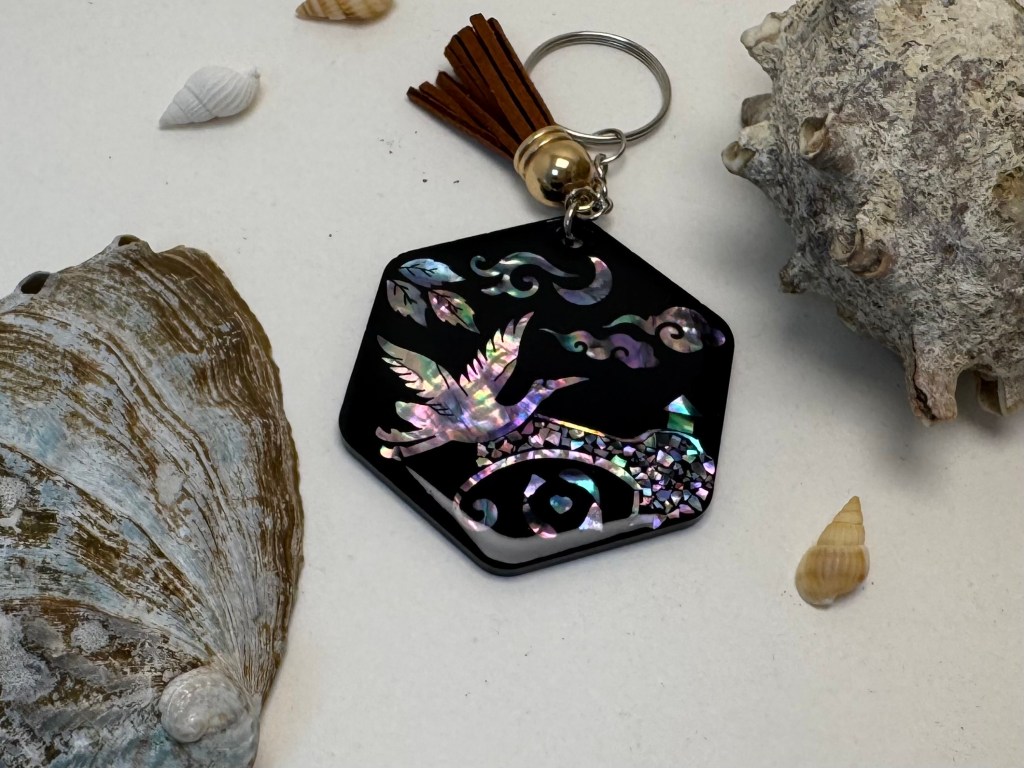
I chose to center my najeonchilgi around a crane, which is a symbol of wisdom and longevity! Here is my finished piece!
 Culture Corner
Leave a comment