Safety in Symbolism
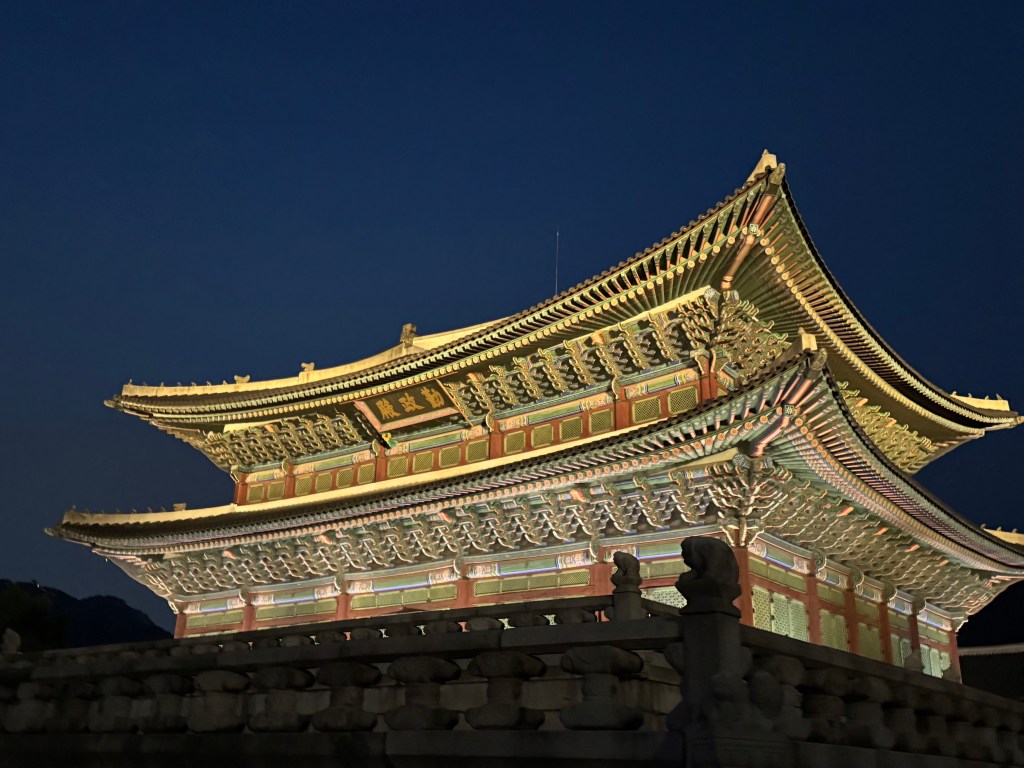
Gyoungbokgung is filled with symbolism through colors, carvings, talismans, and more. This can raise lots of questions for foreign visitors, and even Koreans today, since stepping into the palace complex is like stepping into a new culture for many. This is because the traditions and customs haven’t always crossed over into modern life. Today we have fire hydrants to protect us against fires, but in the days of Gyoungbokgung, Koreans sunk golden dragons in a pond. There are several ways that Gyoungbokgung was protected through symbolism and more concrete means. Some of the main things to be protected against were the elements, fires, and more general evils such as wars or corrupted officials.
Protection from the Elements
Korean weather swings from extreme heat to extreme cold, and can be difficult to handle even with modern inventions such as air conditioning and heaters. However, the people of Joseon had their own ingenious ways to keep cool in summer and warm in winter.
Window Panes
Vertical window panes made of wood and covered with mulberry paper provided a crucial defense against both the heat and the cold. Mulberry paper was coated with oil and allowed to dry, turning it waterproof against the rainy monsoon seasons. These windows could be propped open to allow a cooling breeze during the heat of summer, and some could even be angled according to the height of the sun at different times of the day. In the winter, to provide stronger protection against the wind and cold, thicker sheets of mulberry paper were prepared that included the inner bark which was extra fibrous. These significantly improved the buildings ability to retain heat.
Ondol
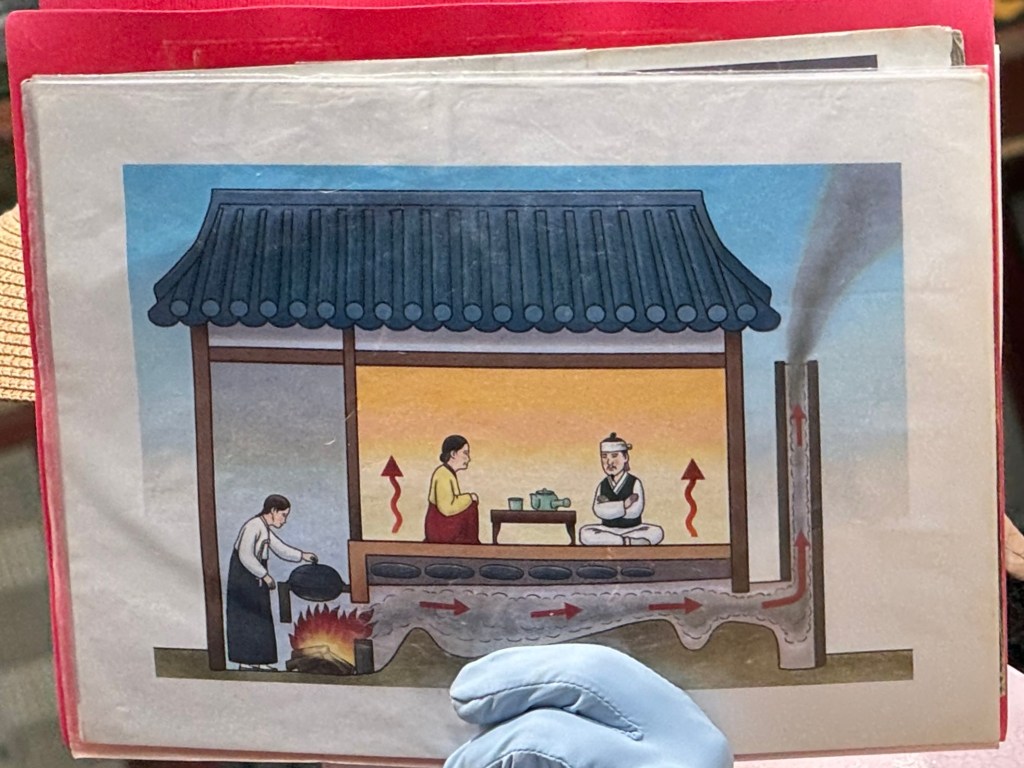
The ondol is a brilliant floor-heating system that kept Joseon people warm and cozy. Hot air vents were buried below the buildings with chimneys a few feet away. While everyone else fueled their ondol with various types of wood, charcoal was used because it created significantly less smoke. This protected the ornate paintings on the walls and ceilings called dancheong from being damaged over time. The ondol worked through directing hot air underneath the buildings, whose floors contained large flat stones that would heat up and transfer the heat inside to the clay or wooden floors.

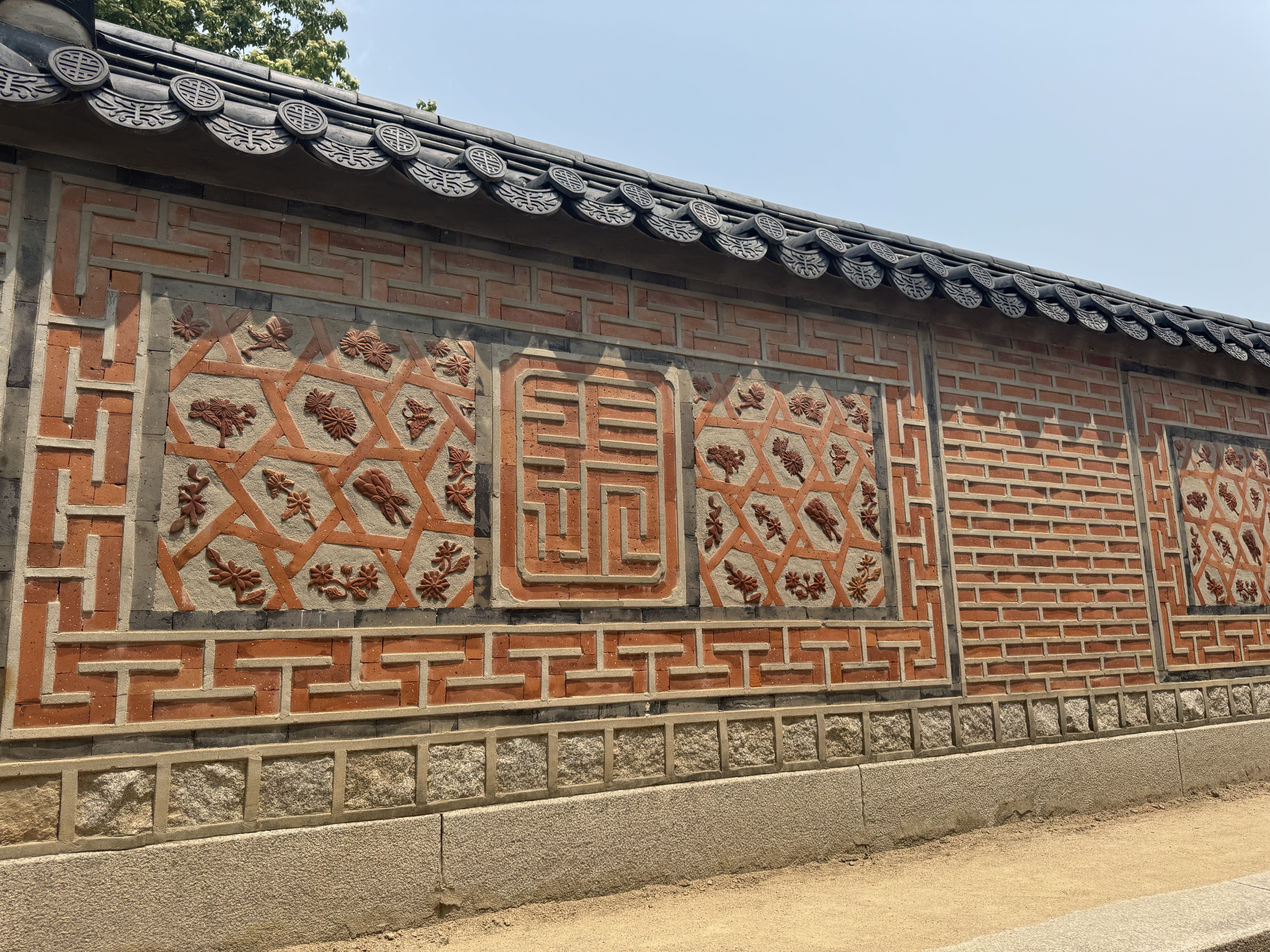
The chimneys of palace ondol systems are nothing like the smokey, dirty looking chimneys I first would imagine. They are, in fact, stunning pieces of architecture. Ondol were actually prevalent among the lower classes before ever spreading into the upper classes and palaces such as Gyoungbokgung. Ondol chimney’s red bricks often form elaborate decorations that are symbolic, often with meanings of protection or blessing. In the alley of Yanguimun Gate there are two chimneys on either side containing brickwork with auspicious Chinese characters. One is cheonsemanse, which means thousand and ten thousands of generations. The other is mansumugang, which means enjoying long life.
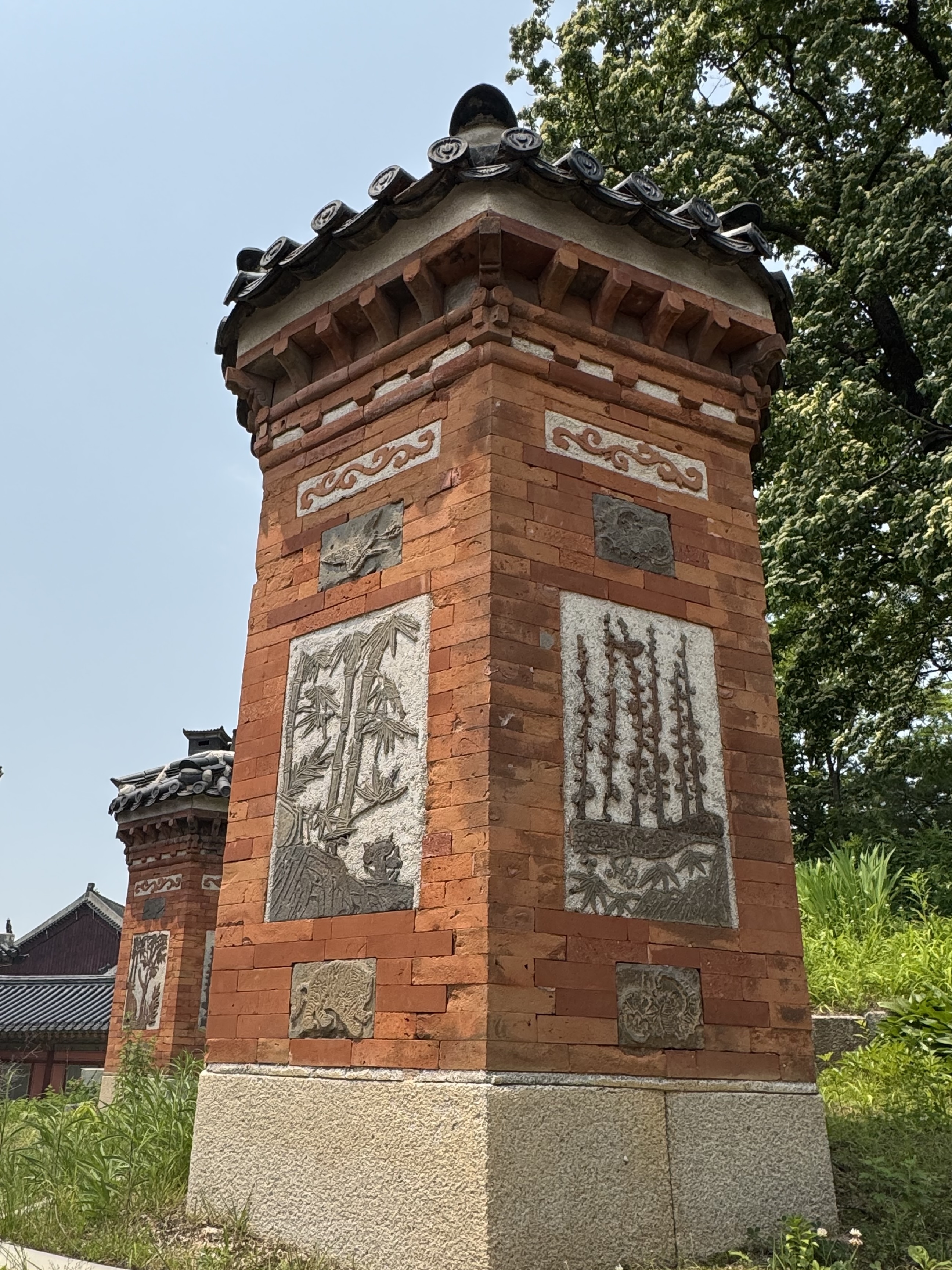
The four chimneys at Amisan Mound are the most spectacular of those found in Gyoungbokgung. This is a space behind the Queen’s living quarters meant for her to enjoy in solace. These chimneys are slightly taller than a person, and again display a beautiful red color. These chimneys are hexagonal, which each side displaying a pattern with rich and specific symbolism meant to drive away evil spirits. Some of these include the dragon face called bulgasari (more on this later), winter plum flowers, bamboo plants, bats bringing blessings, cranes, and symbols of both longevity and the number ten thousand, all of which are considered very auspicious.
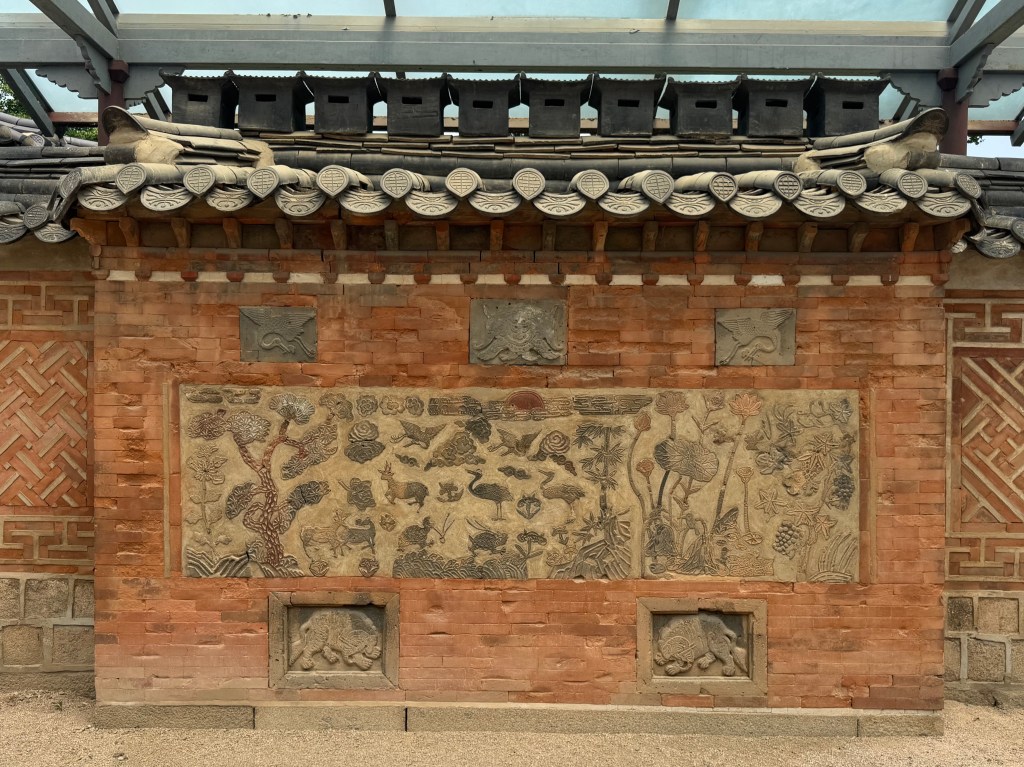
Along the wall of Jagyeoungjeon Hall there is another chimney called the Ten Longevity Chimney with even more symbols boding good-fortune. Tortoises, deer, a duck couple, lotus, other plants symbolizing eternal life, two bulgasaris, and a dragon face protecting against evil spirits.
Protecting Against Fires
Deumeu
Fires are undeniably destructive, even today. In the early Joseon Dynasty, many believed that fires were caused by goblins coming down from heaven and causing trouble. According to folklore, such goblins were very hideous and scared of their own reflection. This is why you might notice large cauldrons called deumeu around the throne room of Gyoungbokgung. These were filled with water, meant both to scare away goblins with their own reflection, and to be used in the case of an actual fire!

Haechi
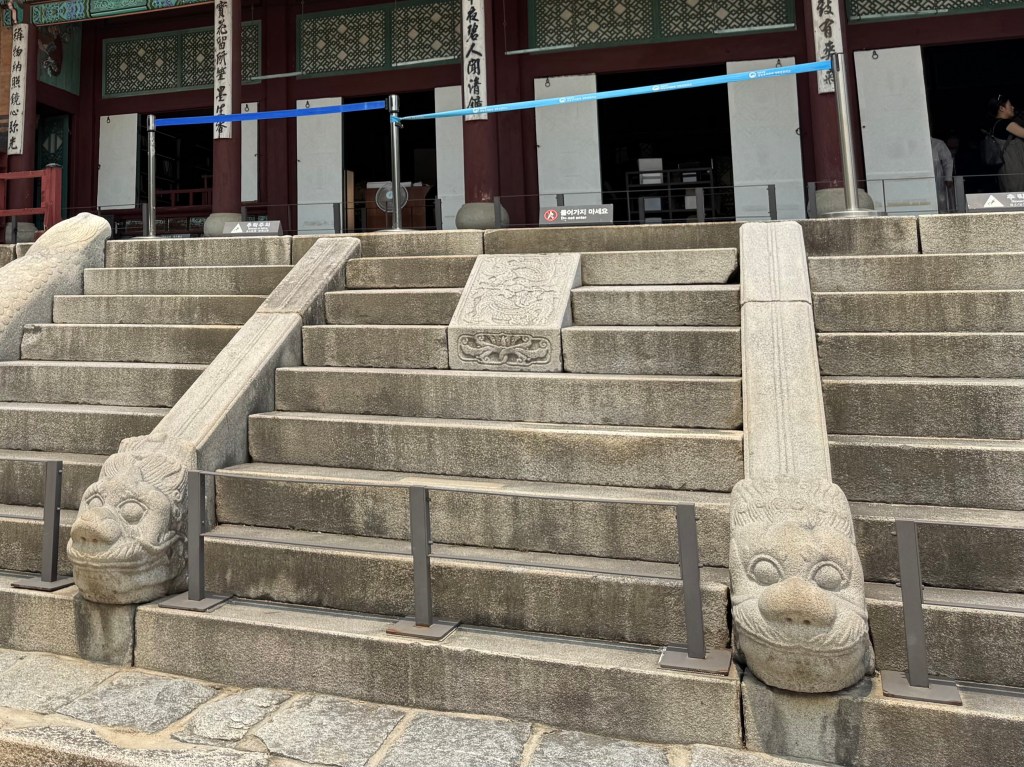
Aside from the Goblin-reflecting deumeu, haechi can be found all over the palace complex. Haechi are a mythological creature known to dispel fires, as well as other evils. Haechi can be described as similar to a lion crossed with a unicorn, having a single horn on top of its head. In fact, it was said that haechi used this horn to headbutt the guilty and crooked before biting them and chasing them away. Often found in front of entrances to important spaces, haechi were both protecting the building from fires, and making sure corrupted officials couldn’t hang around for long!
Sunken Dragon
At Gyoungbokgung there is a beautiful pond called Gyounghoeru with a pavilion standing amidst its waters. This pavilion once had ornate columns shaped like dragons, which were thought to protect the pavilion against the threat of fire. In 1997 the pond was dredged and further fire-protection was found, two bronze dragons large enough to span the length of an arm. It was discovered that when the original dragon columns had to be replaced, simpler columns were used and the bronze dragons placed as a new form of protection.

Broken Ice Pattern
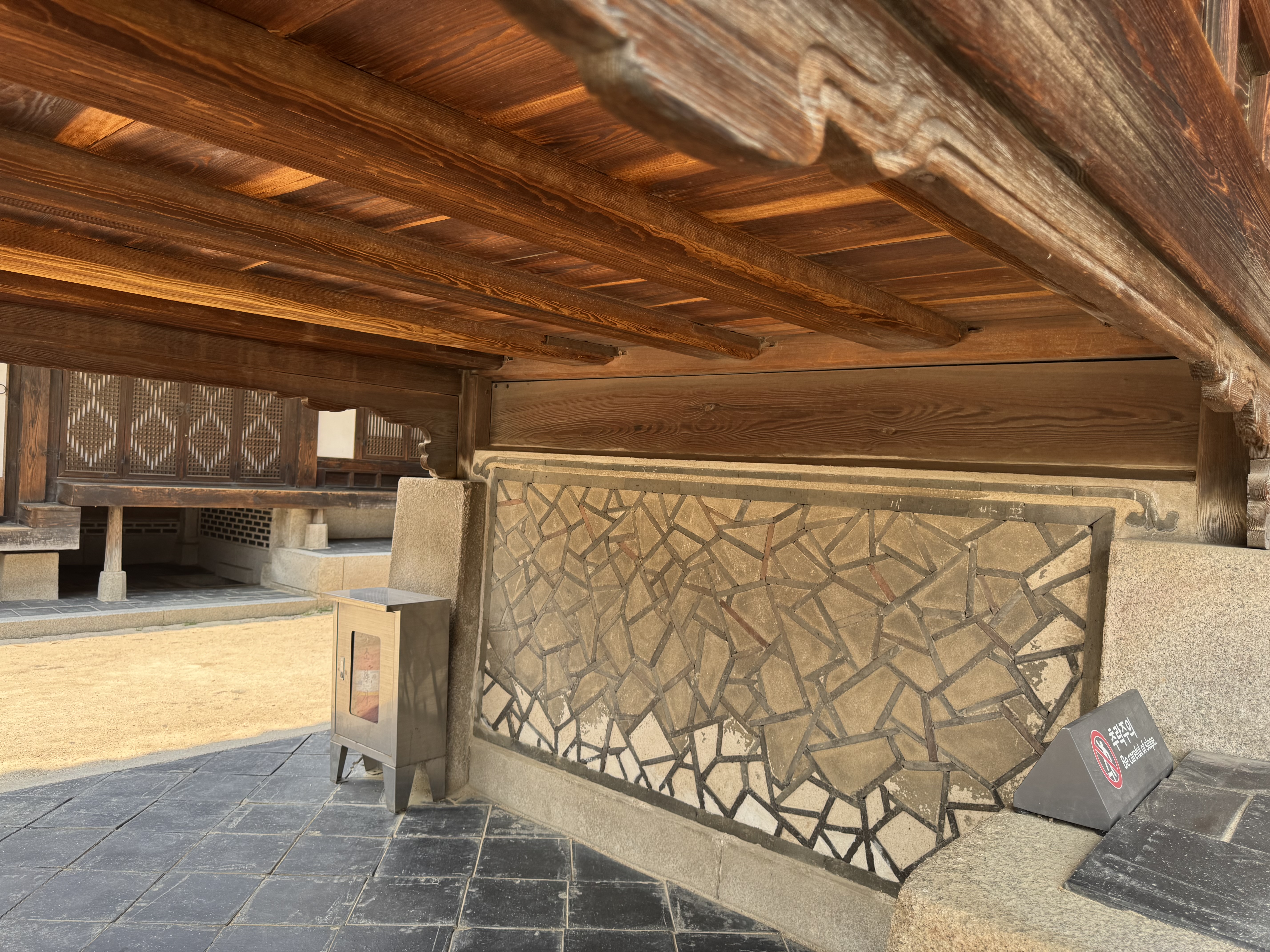
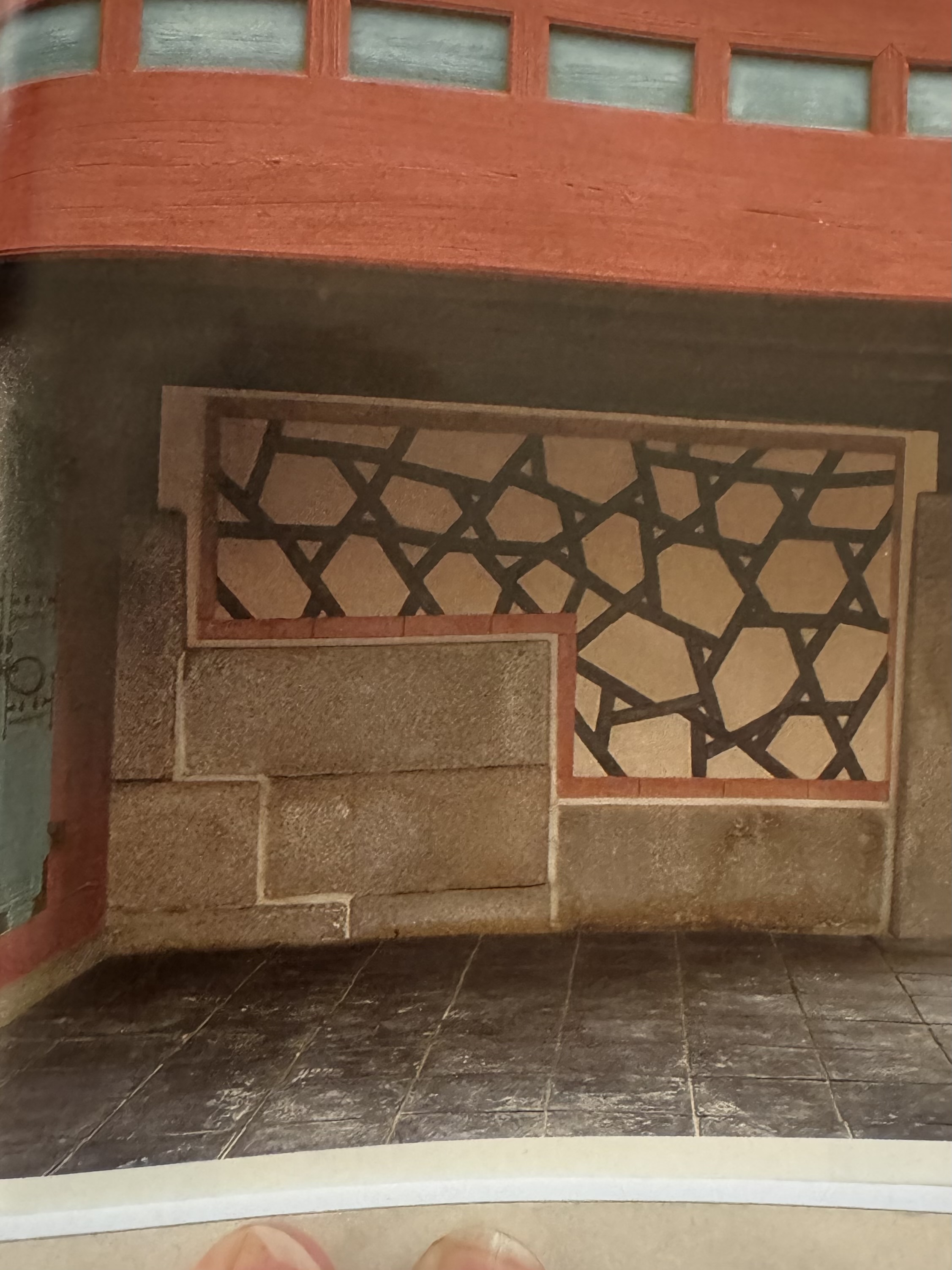
Where the royal concubines used to live, called Jipgyeongdang, there is a pattern underneath one of the lofted rooms named ‘broken ice.’ It is located right next to a fuel hole connected to the ondol system. This pattern can be found in other locations in Gyeongbokgung, as well as at other palaces such as Changdeokgung (which is pictured below in the top right). This pattern, especially when located next to the fuel holes, is meant to prevent fires. The picture below is quite ironic, since there is a modern day fire extinguisher placed right next to the pattern! The bottom left picture is one of a broken ice wall including flowers throughout, located near Amisan, or the Queens Gardens. The picture to the right is the pattern near Jipyeongdang as pictured in Korean Royal Palace: Gyoungbokgung by Yi Hyang-woo.
Protection from Evils
Bulgasari
Bulgasari are mythological creatures previously mentioned as elements of protection found in Gyoungbokgung. These creatures are supposed to have the trunk of an elephant, body of a bear, claws of a tiger, eyes of a rhinoceros, and tail of a bull. Just like haechi, these beasts protect the palace from both fires, and more general evils. The most fascinating example of a bulgasari in the complex is that found by Jasimun gate near Gyeonghoeru Pavilion. The auspicious creature is carved atop one of the posts, with bullet marks from the Korean War on some of the supporting beams and pillars. This is very fitting for the creature, since they are known to protect from war and foreign invasions by chewing iron and swallowing fire. Some believe this bulgasari is the reason why the structure of Gyeonghoeru Pavilion survived the war!
Cheonrok
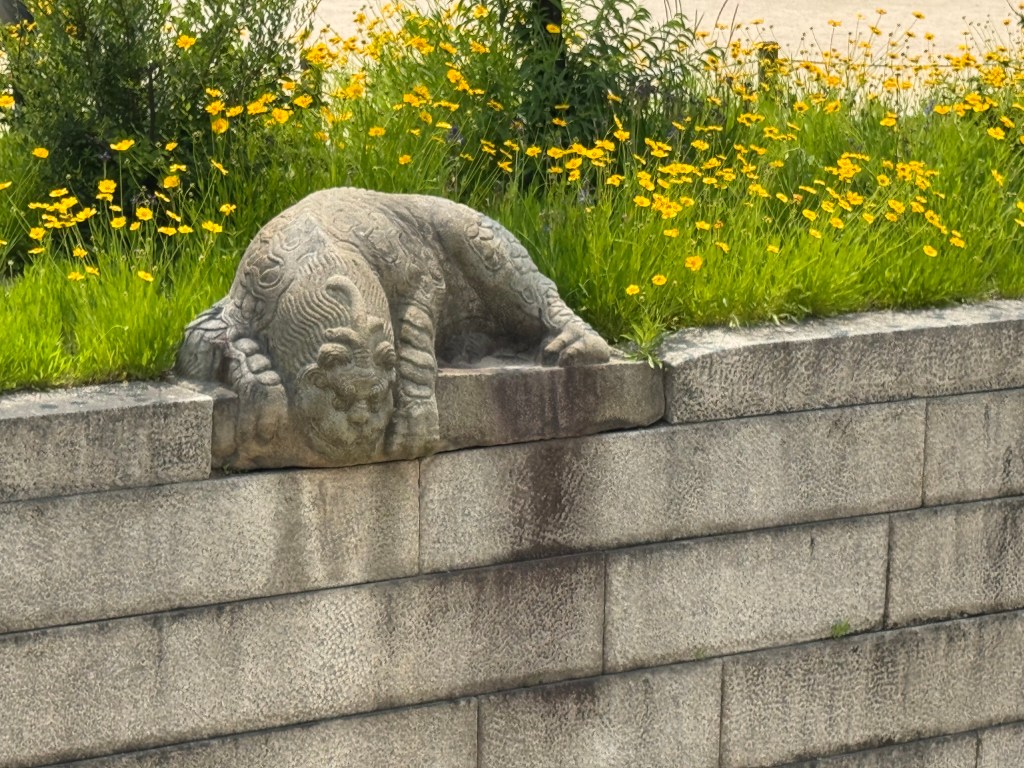
Cheonrok are another mythological creature seen in Gyoungbokgung Palace. According to Korean Royal Palace: Gyoungbokgung by Yi Hyang-woo, these creatures are scaled unicorns skilled at repelling evil. These were placed by the waterway at the entrance of Gyoungbokgung to block any bad energy that may come in with the water. This is why it looks like at any minute they might get up and jump in!
Japsang
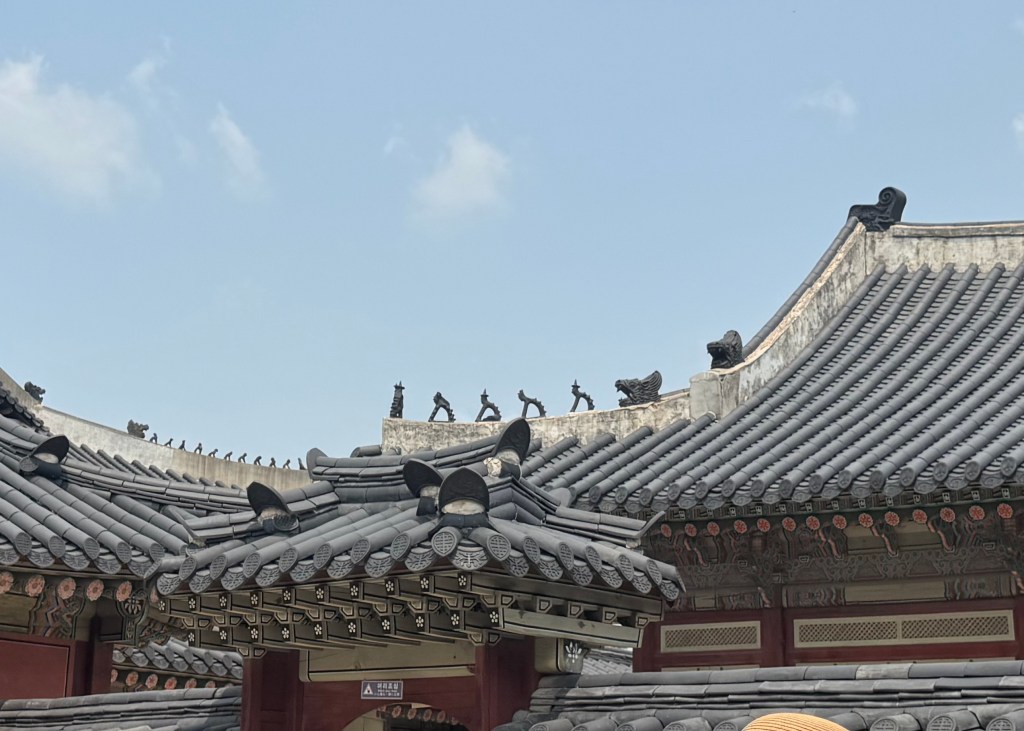
The small figures along the roof’s upturned edges are called japsang. These are auspicious characters from the famous story Journey to the West. They include a Buddhist monk, the Monkey King, a pig monster, and a half water demon. The number of japsang on a roof can range from 3-11, with additional japsang coming from shamanic traditions native to Korea rather than from the Chinese Journey to the West. The more japsang on a roof, the more important, and the more protected, a building is!
Dancheong
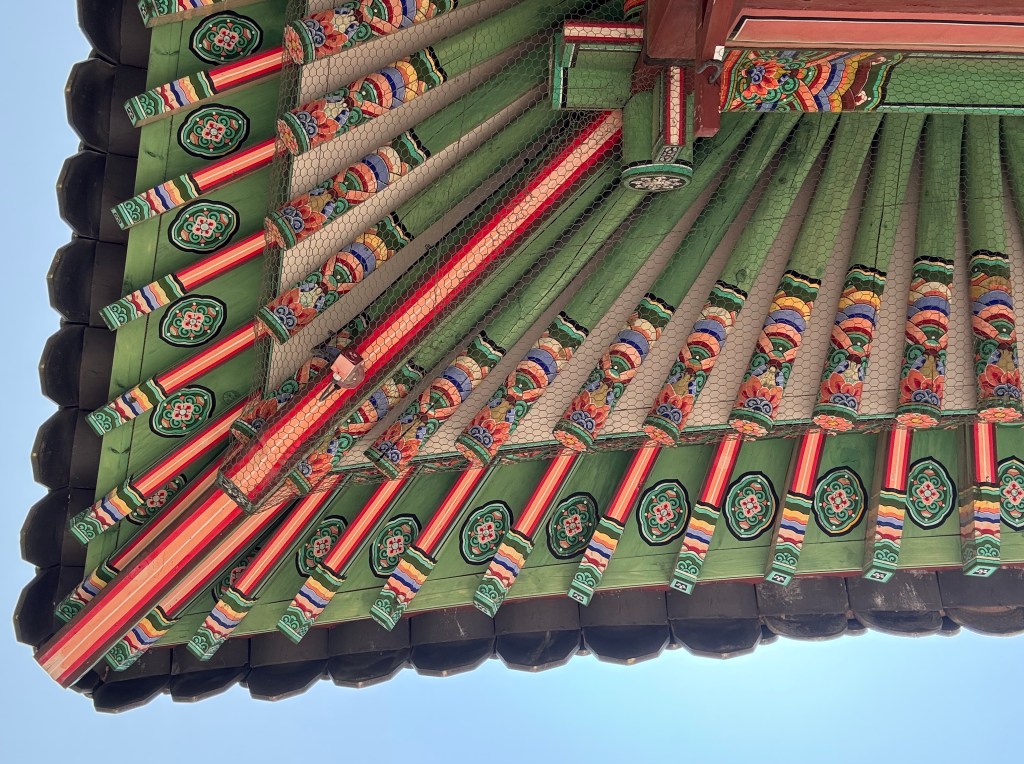
Dancheong are the beautiful paintings on the walls and ceiling of palaces and buddhist temples in Korea. The five colors, black, yellow, blue, green, and red are symbolic of the five elements existing in harmony. Dancheong patterns often represent different meaningful flowers. Stylized lotus represent Buddhism, peonies represent fertility, and pomegranates represent wealth and honor. The colors also have specific meanings, such as directions and seasons. The paintings together are symbolic of good fortune, but also help protect the wooden structures from sun, rain, and insect damage. They are also gorgeous!
Conclusion
Built in 1395 by King Taejo, Gyoungbokgung has long been a proud symbol of Korea and its culture. Through this palace, we can gain insights into the fears and solutions of the Joseon people. In 1910 most of the complex had been demolished by the Japanese occupation. Its current, majestic state is a testament to the resilience of the Korean people. Gyoungbokgung means “Palace Greatly Blessed by Heaven,” which certainly seems to be the truth! If you ever make your way to Korea, be sure to stop by Gyoungbokgung, since now you’ll understand much of the symbolism built into its impressive architecture!
Sources
The Royal Palace: Gyoungbokgung by Yi Hyang-woo
Personal Tour Notes taken in April, 2025
 Culture Corner
Leave a comment